Marketing is becoming more efficient but monumentally less effective.
In a recent study by the legendary Les Binet using the IPA databank, he uncovered that Media ROI has improved by 4% vs the previous period of measurement (2022-2024 vs. 2018-2022) but profitability through marketing – the true measure of effectiveness – has dropped by 11%. This is simply a reflection of the marketing industry caring less about their strategy and creative quality, and caring more about showing incremental efficiency gains and direct attribution in digital channels.
But it’s fundamentally wrong – and the data evidences this decline in profitability of marketing. This is predominantly due to the buyers and marketing becoming ever more distant from each other.
Part of this neglected vital mix is distinctiveness and the art of standing out. Being different. Or even just being perceived to be different. In this blog, I will break down the power of distinctiveness in B2B marketing and how you can achieve distinctiveness for your B2B brand.
It’s all about building memory structures
86% of B2B buyers have a mental shortlist of brands that could meet their needs on day one of their buying journey.
79% of B2B buyers will then do more research even if they have their original ‘mental shortlist’. And 77% of those will add at least one potential vendor to their ‘list’.
But the reality is that 93% of B2B buyers end up choosing a brand from their original mental list regardless.
So if you haven’t built mental availability with a buyer before they reach the buying journey – you’re kind of screwed.
How distinctiveness supports mental availability building
If you look and sound the same as your competitors, you won’t be noticed, let alone remembered. In fact, you’ll probably be spending your marketing budget building brand demand for the market leader in your sector if they look and sound similar to you.
Distinctiveness helps you be the one that gets noticed, remembered and then recalled instead of all your competitors who look the same.
Despite this, the B2B marketing space is a sea of sameness.
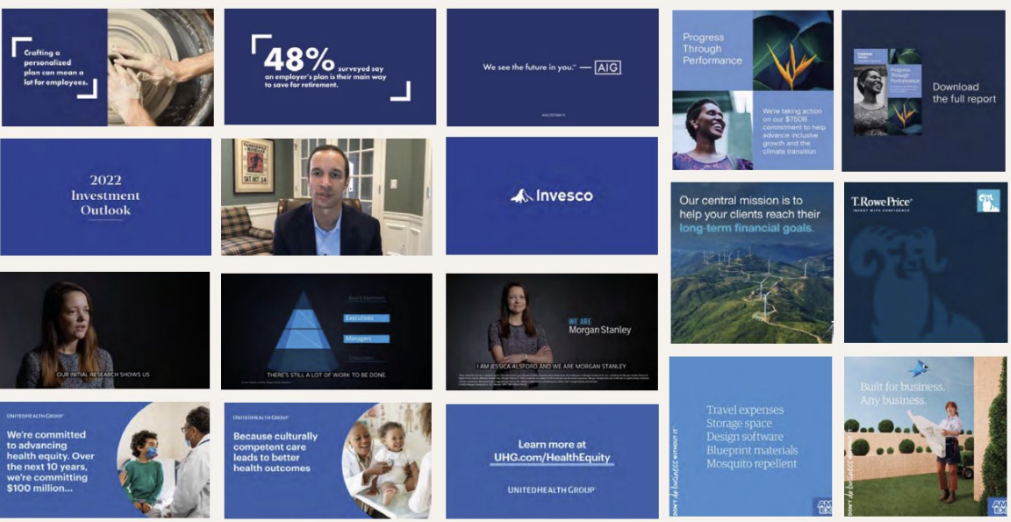
These are four different B2B FinServ companies.
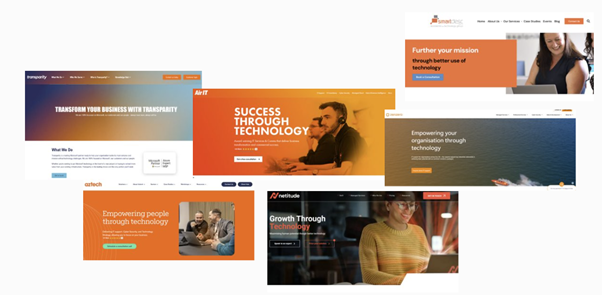
These are six of the top twenty five IT MSPs in the UK according to Cloudtango. They all look the same and sound the same, making them all totally forgettable.
Why is this the norm in B2B when distinctiveness will help you pass memory thresholds and create brand salience?
The scariest stat I’ve found was from advertising legend Dave Trott, who said
89% OF ALL ADVERTISING IS NOT NOTICED OR REMEMBERED AT ALL.
The whole point of advertising is to promote a brand. But 9/10 times it’s not even noticed, let alone remembered. Without building brand salience, you’re making your activation marketing work harder and harder without the right foundations.
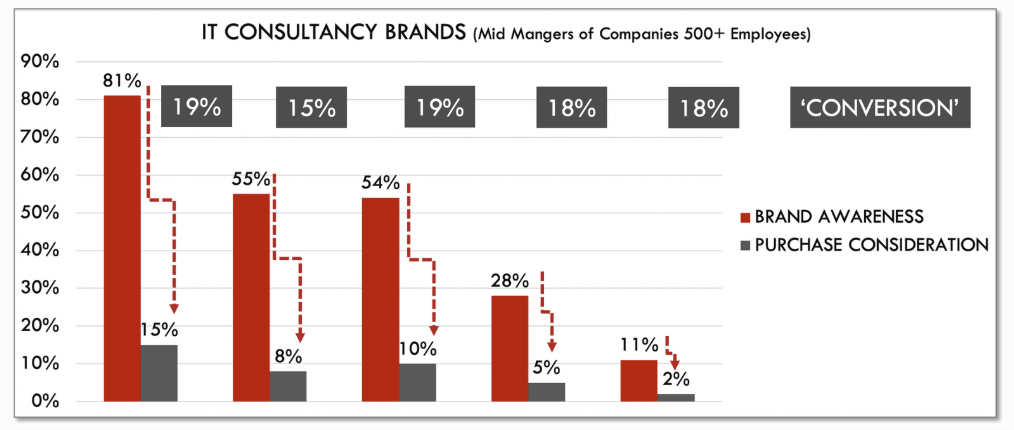
This graph from TheBrandGym shows how better brand salience leads to increased purchase consideration with perfect causality. Exactly the reasoning to show the need for brand building through distinctiveness – and this is based on B2B IT Consultancy Brand data.
Play it safe to be boring. Be boring to fail.
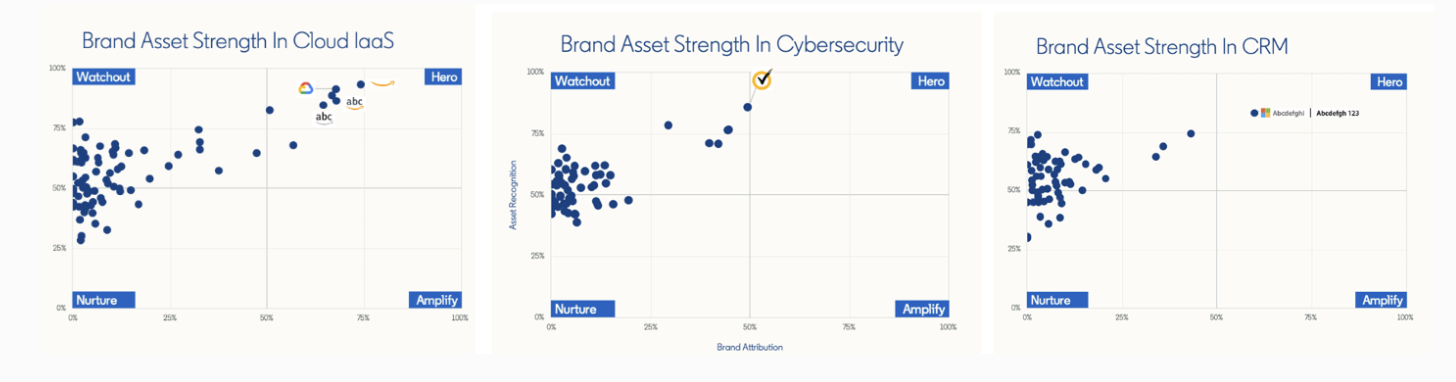
These graphs from LinkedIn and The B2B Institute show that to be distinctive and memorable, brands need to be in the top right quadrant. In reality, most B2B brands sit on the far left in the centre. This is down to their distinctive brand asset quality. Or lack thereof.
‘How do you build truly distinctive brand assets?’ you ask.
Jenni Romaniuk of the Ehrenberg-Bass Institute, who pioneered the theory of distinctive brand assets, has a helpful grid that explains how to make an asset ‘distinctive’. It’s simply that it needs to be both famous/known and unique. One or the other is a fail. Neither is an even bigger flop. Both is the secret sauce.
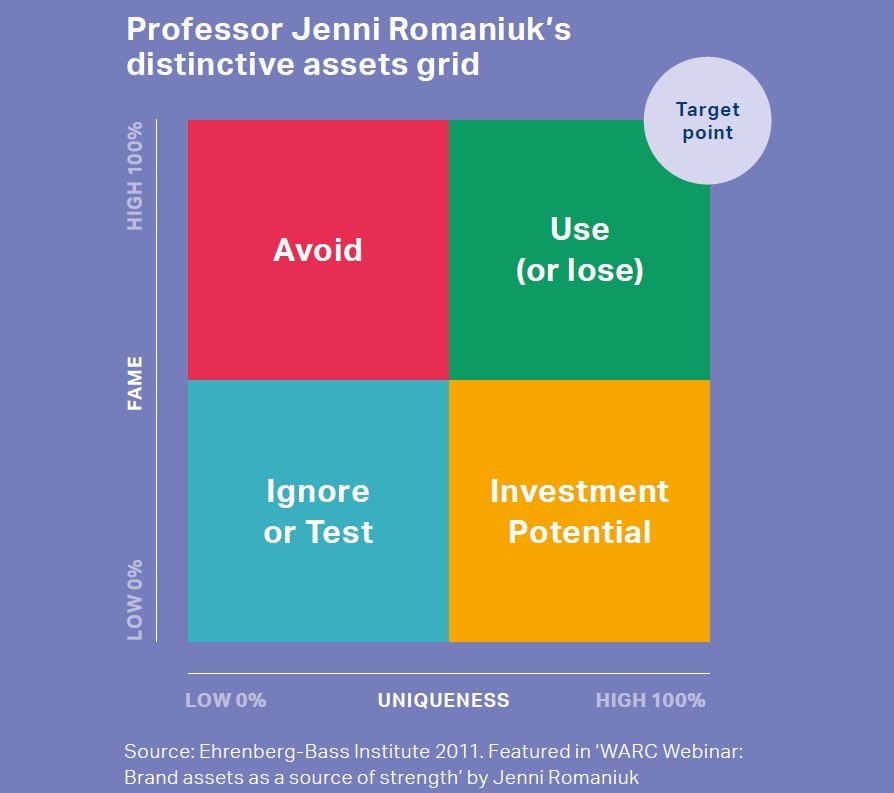
That means you need to think strategically and creatively about your distinctive assets during the development process – to create something genuinely unique. Then, you must invest enough to make that distinctive asset known.
And distinctive assets come in all shapes and sizes. Let’s take McDonalds as a great examples of distinctive assets. They have the golden arches, the distinctive red card container their fries come in, the red and yellow colour combo, the “I’m lovin’ it” slogan, and of course, the “dah dah dah dah dah, I’m lovin’ it” jingle. That’s a key point too. Distinctive assets can vary drastically – and different types are more effective than others.
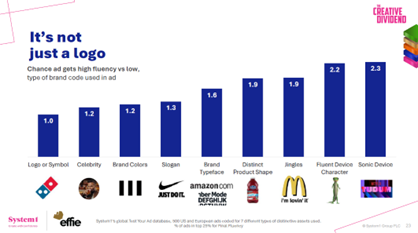
This data from System1 breaks down the different levels of effectiveness – in terms of brand fluency (how recognised and noticeable your ad for your brand was) – for each type of distinctive asset. Interestingly, audio and sonic assets, as well as brand characters are the most effective.
What’s the benefit of making distinctive assets?
Studies show that consistent use of distinctive assets across channels can increase revenue by up to 23%. Mainly because they are recognisable which helps you pass the 2.5 second attention-memory threshold when you market to your buyers. Scarily, 85% of digital ads fail to pass this threshold.
Being dull and boring is also a sure-fire way to be ignored.
- 49% of ads for Professional Services organisations make buyers feel nothing.
- 48% of ads for Financial Services organisations make buyers feel nothing.
- Dull campaigns have a 40% lower ROI.
And according to System1, boring ads cost 2-2.6x the media budget to generate the same effects. If you already have tight budgets, don’t stretch them even further by being dull.
People are exposed to over 6,000 ads and branded messages every day. It’s a noisy world. My advice…
- Properly understand your buyers so you can strategically position your brand as a unique, differentiated solution – even if you offer the same services as your competitors.
- Orientate yourself in the market by reviewing what your competitors say and look like, and reverse benchmarking to make yourself distinctive in comparison. Too many people copy what their competitors do but that’s the opposite!
- Develop distinctive assets to help you improve the quality of your marketing through better attention-memory conversion and emotion.
- Don’t fight on the most competitive battlefield in the world – BoFu marketing – market to buyers when it matters and build sufficient mental availability before they hit that lucrative buying moment. In other words, get on the mental shortlist!