
Michael Curran
B2B Technology Buyer Personas for Multi-Person Decisions
B2B technology buyer personas should explain how people influence a shared decision. A useful persona…

You’re spending money on ads, but the results aren’t there. Maybe your click-through rates are decent, but conversions are low. Maybe your paid social campaigns are driving traffic, but that traffic isn’t turning into leads. Or maybe, despite all the optimisation and targeting, your ads are just… boring.
The truth is, most paid media strategies fail because they focus on the wrong things. Too often, businesses measure success by short-term metrics, limit themselves to a single channel or create uninspiring ads that get lost in the noise.
If any of this sounds familiar, don’t worry—you’re not alone. Let’s break down the most common mistakes in paid media and, more importantly, how to fix them.
Your dashboard is full of numbers, but are you actually looking at the right ones? It’s easy to get distracted by vanity metrics—click-through rates, impressions, cost-per-click. They look impressive in reports, but do they tell you whether your campaign is making a real impact? Not always.
Click-through rates might be through the roof, but if those clicks aren’t converting into pipeline, what’s the point? Likewise, if you’re celebrating a dip in cost-per-click but attracting the wrong audience, you’re not winning—you’re just wasting budget more efficiently.
The real question isn’t “How many people clicked?” It’s “Are the right people engaging, and are they turning into revenue?”
A clear marketing data strategy connects those engagement signals with pipeline and revenue, so performance is judged on business impact rather than surface metrics.
Too many businesses judge their paid media success within a two-week window. They launch a campaign, see a low conversion rate and hit the panic button.
But here’s the thing—B2B sales cycles are long. Buyers don’t click an ad and immediately sign a contract. They research, compare, and take their time. Expecting instant conversions from a LinkedIn ad is like expecting someone to propose on the first date—it’s just not how it works.
Instead of obsessing over short-term performance metrics, start looking at:
Great paid media strategies take a long-term view. If you’re only tracking the surface-level stuff, you’ll never see the bigger picture—and that’s why so many businesses pull the plug before their campaigns ever have a chance to work.
Let’s be honest—most B2B ads look like they were written by AI in 2015. Stock images of people shaking hands. Generic “solution-oriented” messaging. Buzzwords that mean absolutely nothing.
And then marketers wonder why no one clicks.
The reality? If your ad doesn’t make someone stop scrolling, it’s dead on arrival. People are bombarded with ads daily, and the only way to break through the noise is to actually be interesting.
Why “professional” doesn’t mean boring
Somewhere along the way, B2B marketers decided that their audience—real, living, breathing humans—only respond to bland, corporate messaging. That’s a mistake.
Whether you’re selling to CMOs or procurement managers, they’re still human. They watch Netflix. They laugh at memes. They engage with content that speaks to them personally. If your ad doesn’t spark curiosity, humour or emotion, it won’t stand out—no matter how big your budget is.
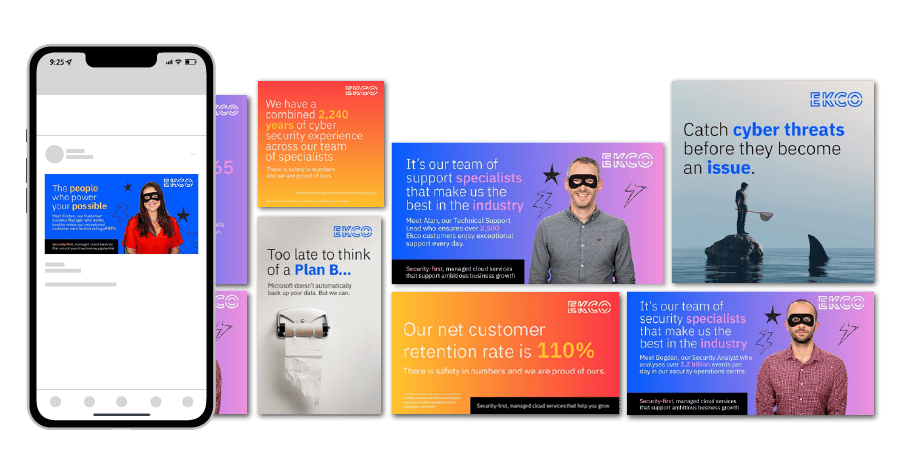
So if your paid media isn’t performing, ask yourself: Would you click on your own ad? If the answer is no, it’s time to rethink your creative approach.
Paid media isn’t a magic bullet—it’s part of a larger ecosystem. If you’re running ads in isolation without aligning them with your content, SEO and sales strategy, you’re just throwing money into the void.
For paid media to work, it needs to fit into a bigger picture:
Paid media can drive demand, but it needs supporting layers to nurture leads and move them toward a sale. The most successful campaigns integrate paid ads with a holistic marketing strategy, ensuring that every touchpoint reinforces the message.
For a practical framework, follow these five steps to build a multi-channel paid media strategy that works.
If your paid media isn’t delivering, chances are you’re making one (or more) of these common mistakes. The good news? Every one of them is fixable.
Start measuring what actually matters. Diversify your channels. Stop playing it safe with your creative. Be patient. And most importantly, integrate your paid strategy into the bigger marketing picture.
If you get these fundamentals right, your paid media won’t just perform better—it’ll become a real driver of growth for your business.
And if you need help making that happen? Well, you know where to find us.