
Gabe Green
Unignorable: How B2B tech brands get noticed, remembered and chosen
The evidence behind effective B2B tech marketing - how attention, distinctiveness and consistency help brands…
If you’ve felt the ground shifting beneath digital marketing these past three years, you’re not imagining it. Media costs have see‑sawed, attribution has blurred, and formerly dependable performance models have lost their bite. Europe’s CMOs are reading the same currents – and they’re steering back to fundamentals. In McKinsey’s State of Marketing Europe 2026 (based on 500 senior leaders across the UK, France, Germany, Italy, and Spain), branding is ranked the #1 priority for the year ahead, ahead of performance marketing tactics, new MarTech, and even generative AI!
That’s not nostalgia – it’s strategy. When channels get noisy and volatile, only brand meaning, trust, and emotional differentiation compound over time. The McKinsey report’s lens is clear: Europe’s marketing leaders are pairing classic brand building with modern tools – interactive branding, full‑funnel orchestration, and selective, value‑proofed AI – to create resilient growth in an uncertain market. I’ve written this blog to pull out some of the key points for B2B Tech marketers. If you’d like to download the full report, there is a link at the end of the blog.
Three themes dominate the 2026 playbook.
Brand, data privacy, authenticity, and employer brand sit at the top of the agenda. In fact, four of the top five priorities cluster around trust and long‑term brand building.
This is likely due to the general reasoning behind brand building importance which is only magnified in B2B settings where employees are procuring on behalf of a company with their fear of messing up outweighing their fear of missing out. Our CEO, Gary, and I discussed this in a recent episode of the Generation Marketing podcast – and how the modern B2B Tech buyer with their self-serve buying journeys has furthered the need to focus on brand building. You can watch the full episode by clicking here.
Boards want proof. Budget management (#2) and marketing ROI (#6) climb because CMOs must show contribution, not just activity.
Be bold! While many rank gen AI and agentic AI low (#17 overall), leaders already report >20% efficiency gains and are scaling pragmatic use cases. Laggards risk ceding ground.
This aligns with what we’ve felt at Cremarc across the B2B tech space: short‑term tactics without a brand spine fade fast; brands with meaning keep momentum – and often gain it.
I think this graph from Les Binet perfectly explains the effect of marketing activity decay.
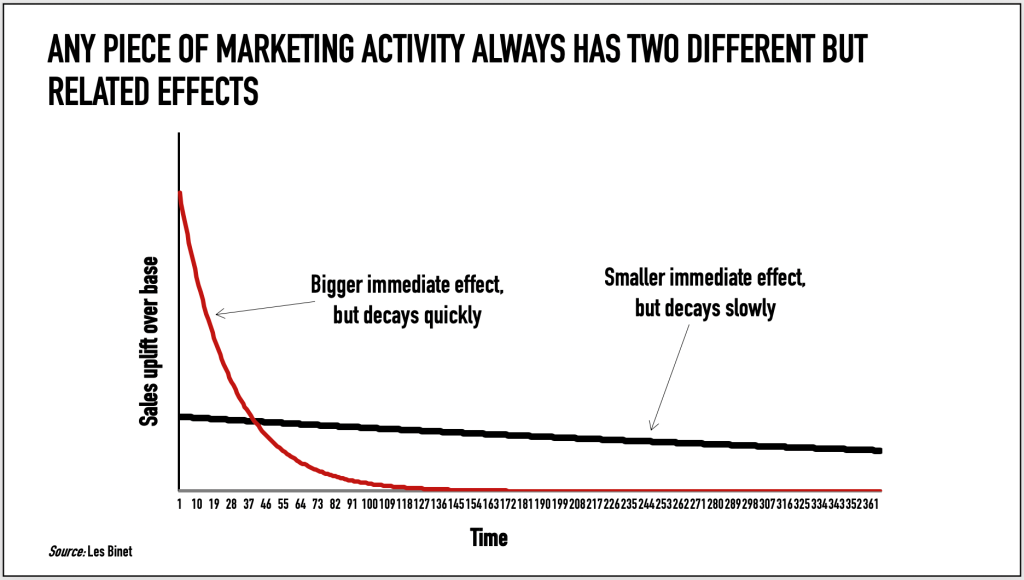
What marketers need to aim for is slower decay, even if that marginally sacrifices the short-term impact. The problem is that boards and business leaders have forced marketers into a corner of short-term focus. That’s what’s driven the tactic-first approach and why brand has sadly fallen down. It’s exciting to see more senior marketing leaders bringing brand back up in the pecking order.
“Branding” in 2026 isn’t a logo lockup or a manifesto video. It’s interactive branding – living identity expressed through two‑way formats that build community, spark co‑creation, and show substance over spin. Conversations. A classic, but probably overused Bezos quote…
“Your brand is what other people say about you when you’re not in the room.”
If you try and build a brand one-way, people will just pick out the bits they want to agree with, and the bits they happen to remember, and if you’re lucky enough discuss your brand – but in their way. If you want to control the narrative, you need to be in it. Converse. Interact.
CMOs plan to increase use of events, conversational marketing, UGC/community, behind‑the‑scenes content, and immersive experiences to meet this expectation shift.
Why it matters? Audiences see 4,000–10,000 ads/day, fatigue drives higher CPAs, and familiarity alone no longer converts. Interactive formats give people something to do with your brand – an experience to join, not a message to dodge.
My take is that in sectors like packaging machinery or automation, “interactive” doesn’t mean gimmicks; it means open demos, operator‑level walkthroughs, customer roundtables, and co‑created application notes – then stitching them into a content engine that runs across trade shows, LinkedIn Lives, industry forums, and partner channels.
Europe’s CMOs are rapidly adopting multipurpose, full‑funnel campaigns that integrate brand storytelling with sales activation. 71% report using full‑funnel activations in 2025 – a jump of nearly 30 percentage points – and brand and sales communication are now designed together.
In B2B, this looks like:
When brand sets the spine, every touchpoint carries the same meaning, so paid efficiency rises and sales friction falls. That’s the compound interest of brand.
Despite macro pressure, 72% of CMOs expect marketing spend to increase relative to sales in 2025; 27% expect it to hold steady; only 1% expect a decline. The message: invest through cycles, but prove impact.
Where’s the money going? Gen‑AI‑enabled marketing is the top category for increased investment, followed by ROI measurement and consumer insights – all instruments to raise effectiveness and efficiency.
My take is that no one should “add AI” as a bolt‑on. Start with spend accountability. Implement a measurement backbone (MMM + incrementality testing + calibrated attribution, ideally pre-testing) so finance sees long‑term brand effects and near‑term revenue impact in the same pane of glass. Use marketing data the right way. A quote I always love is by Andrew Lang, a Scottish writer…
“Most people use statistics like a drunk man uses a lamppost; more for support than illumination.”
If you solely use your marketing data to back up a point you’ve already made, rather than to continually learn and craft narratives with your finance team, you will continuously be playing catchup.
Most companies can explain ≥10% of spend via ROI; only 3% exceed 50% coverage. The barriers tend to be data quality, limited capabilities, and siloed operating models. The fix is systemic – central measurement standards, tool ecosystem, operating model/governance, and org‑wide upskilling – not just another dashboard that gets shared once and then forgotten.
My take is that the marketing leaders should agree the governing KPI (e.g. profitable revenue), tie brand equity metrics to pipeline contribution, refresh models quarterly, and validate with controlled tests.
This is how marketers and their concept of ‘brand building’ get a seat at the budget table without shouting.
European averages underrate AI, but leaders put it in the top five and are already realising ~22% efficiency gains (projecting 28% ahead). High‑impact use cases are general media optimisation, market insight/trend spotting, and personalised content at scale – with human creative teams remaining irreplaceable for distinctiveness and brand tone. That’s a key point there so I’ll repeat it. Gen AI is incredibly powerful in making operations and campaigning more effective in terms of efficiency, but human creative teams are still irreplaceable for distinctiveness and brand tone.
Define the ‘why’ and the distinctive promise. Codify proof points (performance data, certifications, customer references), and double down on the most lucrative and relevant category entry points. Treat brand guidelines as behavioural/contextual (how we show up) as much as visual identity.
Plan formats that invite participation: roundtables, operator diaries, UGC from line managers, AR/VR demos where relevant. Map each to KPIs across the funnel (awareness > qualified demand for category > qualified demand for brand > revenue).
Bundle brand and performance into one plan. Shift more spend to upper funnel (European marketers are doing this) while ensuring mid/bottom paths are stitched to the same story. If we keep asking leaders who don’t understand the importance of brand to invest in brand, they won’t. So build it into a wider full-funnel plan – stitched together to create one piece of activity. Then they can’t just cut the brand bit!
Deploy MMM + brand lift studies; align with the CFO on KPIs; standardise test‑and‑learn; implement pre-testing to protect investments; and make insights actionable in channel squads of relevant leaders across the business.
Scale what works: media optimisation, insight mining, personalised content at scale – but keep humans in the loop to ensure authenticity and creative edge.
Your growth lever in 2026 isn’t “more media” or “another tool.” It’s a clear, credible brand strategy practiced interactively and measured rigorously. When you anchor campaigns in meaning (outcomes, reliability, sustainability, safety), you reduce dependency on fluctuating traffic costs and create long‑term ROI resilience. The McKinsey report shows brands that commit to long‑term brand building and authenticity outperform on ROI and rely less on volatile media dynamics – exactly the shield B2B Tech brands need in choppy markets.
Creativity isn’t optional either. In B2B, the bar is low – which is good news. Emotional differentiation (yes, even in technology!) makes your expertise memorable and your pipeline warmer.
Boring ads cost you 2-2.6x more in ad spend according to System1, while an Advertising Profitability Analysis in 2023 by Paul Dyson revealed that the top two profitability drivers in marketing by a long way are brand equity and creative quality.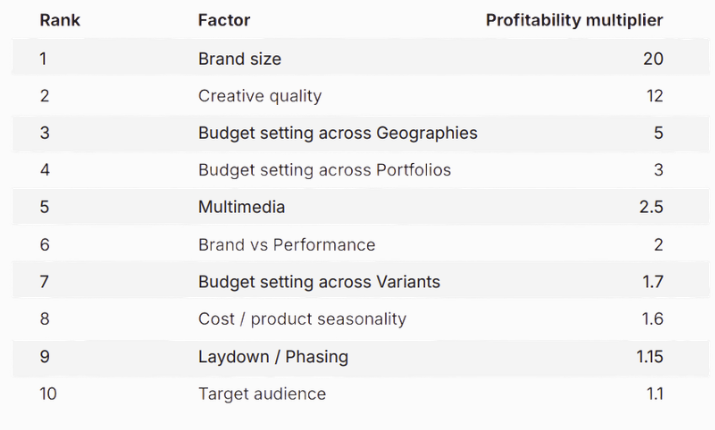
So it really baffles me why all B2B Tech brands look and sound the same. Here is just a quick example of six of the top twenty five IT MSPs in the UK according to Cloudtango. What do you notice? They all look the same, say the same, and sound the same. They’re all forgettable…
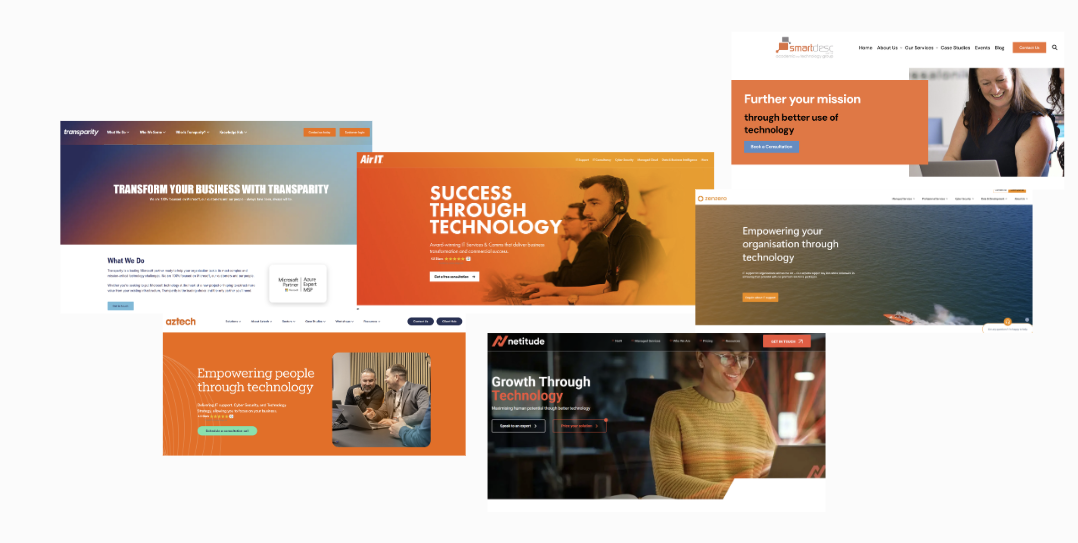
They all just say a variation of “Do more with technology” and that their differentiator is their people. B-o-r-i-n-g.
2026 is a return to fundamentals – but modernised. Interactive branding as an ongoing dialogue. Full‑funnel design that makes the story and the sale the same system. Measurement that wins trust in the boardroom. AI as the lever, not the guide.
Treat your brand as a strategic asset, not a campaign artifact. Invest in identity, trust, and emotional connection – then let performance, MarTech, and AI play their rightful roles as tools that scale your meaning, not substitutes for it. That’s how you grow when the tide’s unpredictable – and how you keep growing when it turns.
The majority of the insights referenced are drawn from McKinsey — State of Marketing Europe 2026 (November 2025), survey of 500 senior marketing leaders across the UK, France, Germany, Italy, and Spain, plus accompanying exhibits on priorities, budget expectations, interactive branding, MROI maturity, and gen‑AI adoption.
Download the full McKinsey State of Marketing report by clicking here.