Knock Knock. Who’s there? Better marketing. The power of humour in B2B.
Humour has a strange reputation in B2B marketing.
Everyone agrees it works when it appears in hindsight, yet very few brands feel comfortable using it deliberately. It is often categorised as risky, inappropriate, or better suited to consumer brands, as though people somehow stop responding to amusement the moment they step into a buying committee or open a procurement document.
The reality is much simpler, and much more human; B2B buyers are still people, attention is still scarce, and memory is still shaped by emotion.
Humour just happens to be one of the most efficient ways of cutting through all three.
Attention, memory and emotion are inseparable
One of the most consistent findings from large‑scale effectiveness research is that emotional response is a stronger driver of marketing success than information density or product explanation, particularly when brands are trying to build mental availability over time.
Among emotional responses, feeling amused consistently scores highly for both attention and memory. In other words, advertising that makes people smile, laugh or feel entertained is more likely to be noticed, processed and remembered than work that simply informs.
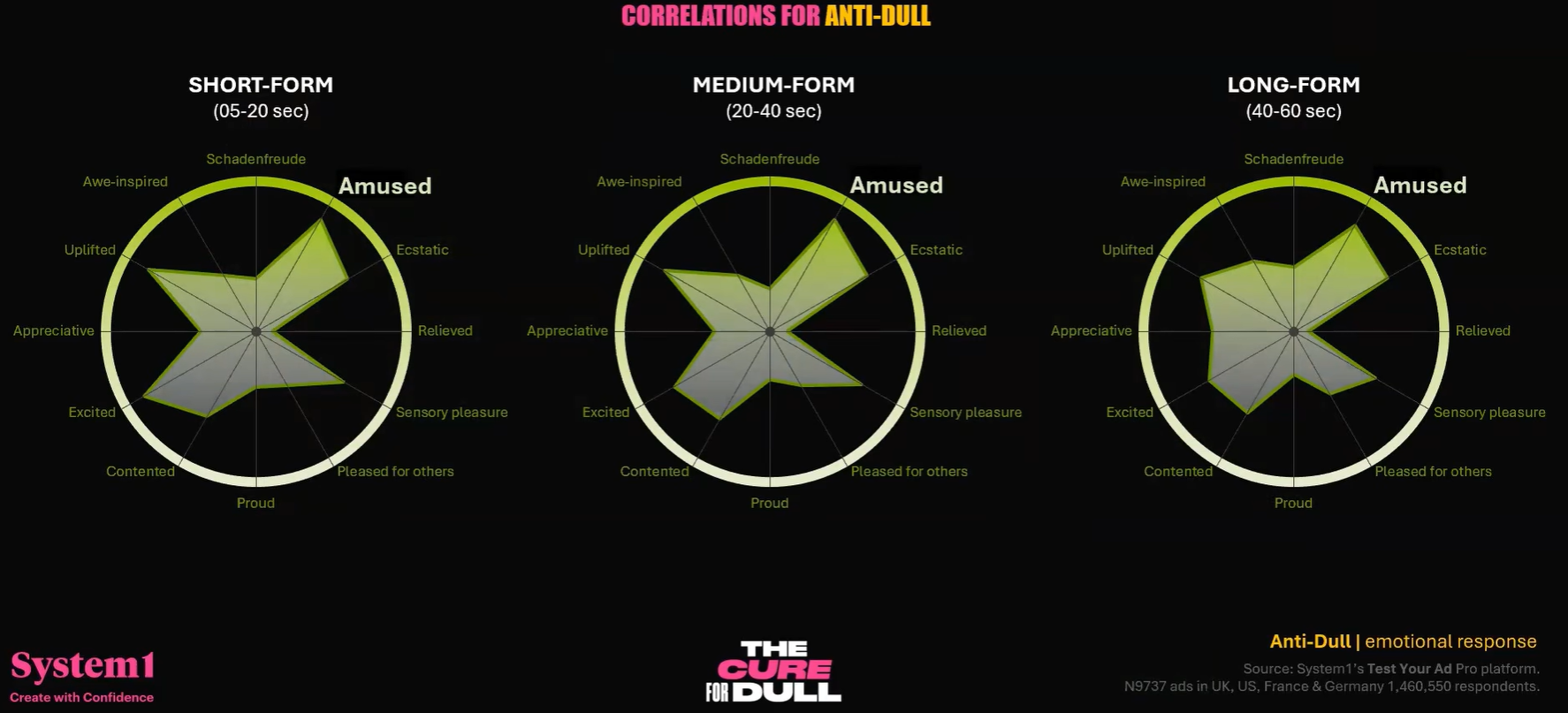
This matters in B2B because buyers are overwhelmed. They are exposed to vast amounts of functional messaging that all claims to be credible, scalable and mission‑critical. Against that backdrop, anything that feels human, light or mildly entertaining immediately signals that something different is happening.
And difference, as we know, is what the brain notices first.
Humour is not about being funny – it’s about evoking an emotive response and creating a memory
The biggest mistake B2B brands make with humour is treating it as a stylistic layer rather than a strategic tool.
Humour that is bolted on for flavour tends to fall flat because it has no grounding in buyer reality. It may be clever internally, but it does not reflect the pressures, tensions or contradictions buyers actually experience.
Effective humour starts with understanding what buyers recognise, not what brands want to impress them with. It often works because it reflects a shared truth; a familiar frustration, an unspoken anxiety, or a slightly absurd part of working life that everyone acknowledges but rarely articulates.
This is why deep B2B customer profiling matters so much when using humour. When brands understand buyers’ behaviours, mindsets and decision‑shaping moments, they can find ways to amuse buyers by showing that they understand them.
That recognition is what creates emotional connection, not the joke itself.
Behavioural profiling unlocks effective humour
There is a persistent fear in B2B that humour risks undermining credibility. In practice, the opposite is often true.
Humour that is grounded in real buyer behaviour signals confidence. It shows that a brand understands the category well enough to comment on it, to simplify it, or to gently expose its contradictions, rather than just distribution sales materials. It shows a brand actually understands its customers and cares about what matters to them.
Profiling buyers based on behaviour and mindset rather than job titles enables brands to identify:
- Where buyers feel tension, frustration or fatigue.
- Which parts of the process feel overly complex or performative.
- What buyers privately acknowledge but rarely say aloud.
These insights create natural opportunities for humour that feels empathetic rather than flippant. The result is work that feels relieving rather than risky, because it mirrors reality instead of trying to entertain for entertainment’s sake.
This is exactly the kind of insight-led approach we take to customer profiling and campaign design – ensuring that emotional creativity always aligns with real buying behaviour rather than assumption or stereotype.
Humour helps challenger brands punch above their weight
Humour is particularly powerful for challenger and scale‑up brands because it accelerates emotional impact.
Smaller brands do not have the luxury of being passively recognised. They need attention, memory and positive association quickly, often with fewer touchpoints. Emotional responses help them compete disproportionally with category leaders who benefit from familiarity alone.
Research consistently shows that highly emotional advertising drives stronger brand effects for challenger brands than low‑emotion work, helping them grow more like big brands by borrowing the same psychological shortcuts that market leaders benefit from naturally.
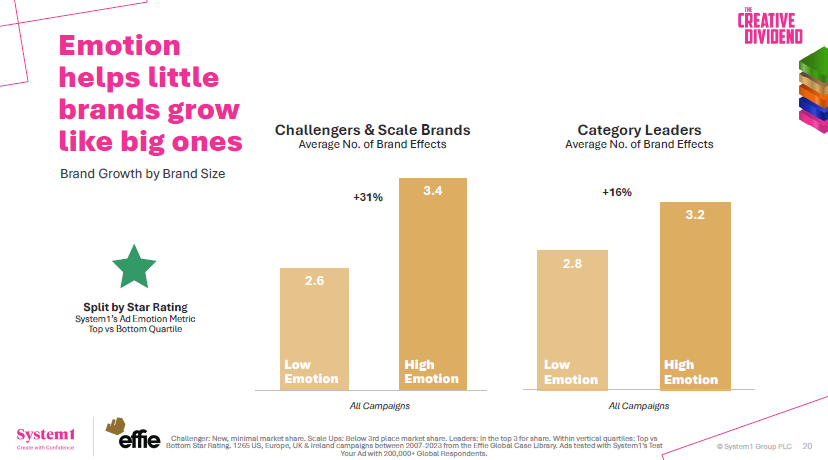
Humour fits perfectly here because it creates an immediate emotional signal without requiring expensive production or long narrative build‑up. When paired with fluent branding, it also helps brands avoid being memorable but unowned, which is where humour sometimes goes wrong.
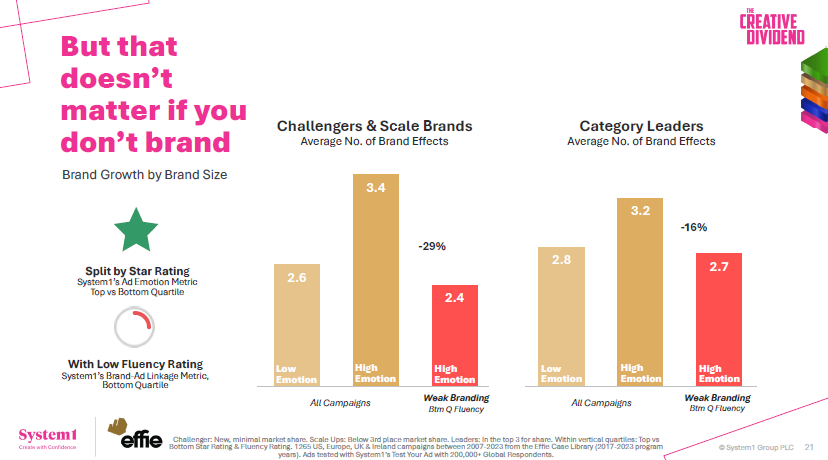
Emotion helps challenger brands grow like enterprises – but only when branding is clear enough to stick.
Format matters, but intent matters more
Short‑form formats tend to reward humour because amusement can be delivered quickly. Longer formats allow humour to sit inside broader storytelling, often reinforcing credibility rather than detracting from it.
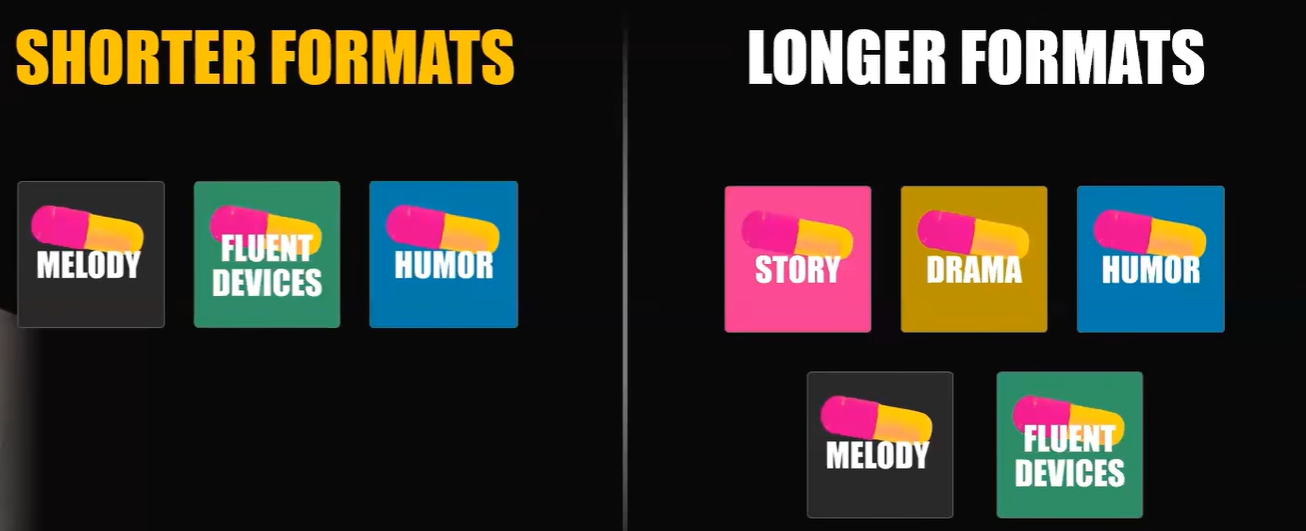
(Data from System1 on the most effective antidotes to dull marketing – split by format length)
In both cases, the underlying principle stays the same; humour works when it earns attention without demanding cognitive effort. Buyers don’t need to get the joke intellectually; they need to feel that the brand understands them emotionally.
This is why heavy product exposition, abstract visuals and overly self‑conscious execution tend to suppress emotional response, while characters, dialogue, distinctive voices and recognisable situations amplify it.
The goal is not to entertain buyers endlessly, but to make them feel something fast enough that your brand becomes easier to recall later.
Standing out doesn’t always mean shouting louder
In many B2B categories, everything sounds urgent, serious and consequential. Ironically, this is precisely why lightness can be distinctive.
Humour lowers defences. It smooths friction. It helps buyers feel comfortable moving towards a brand rather than cautiously evaluating it from a distance. Over time, that emotional familiarity becomes a competitive advantage.
But humour is not a shortcut. It only works when it is built on real understanding of buyer behaviour and decision context. Without the foundation of solid customer profiling, it risks being empty.
With it, humour becomes one of the most efficient ways for B2B brands to feel human, memorable and genuinely different.
And in markets where most competitors are still trying to sound impressive, being able to make buyers smile might be the most serious strategic move a brand can make.