The cost of dull marketing in B2B SaaS and how to properly stand out.
B2B SaaS has a dullness problem.
Not because SaaS is boring. In fact, it’s usually incredibly interesting and technologically progressive.
But because most SaaS marketing ends up looking, sounding and behaving exactly the same. The same visual language. The generic value propositions. The same “we help you scale faster” promises.
And according to System1’s Cost of Dull research and whitepaper, that sameness isn’t just uninspiring – it’s commercially wasteful.
Boring SaaS marketing is more expensive
In the UK, over 90% of B2B ad spend on TV is effectively wasted because the creative lands in the “Very Dull” or “Extremely Dull” categories. SaaS doesn’t escape this – it amplifies it.
Why?
- SaaS categories are crowded (with the market as a whole growing roughly 20% YoY)
- Products are often abstract and loosely slotted into generic subcategories
- Messaging defaults to rational language and feature-led explanation
- Creativity is sacrificed for ‘clarity’ and ‘innovation’
The result is neutral emotional response – people feel nothing, remember nothing, and do nothing. And neutrality doesn’t mean “safe”. It means invisible. Invisible to all your potential buyers. Invisible in the category.
Category sameness is the root cause
Most dull SaaS marketing isn’t dull because the creative team failed. It’s dull because the strategy underneath it is generic. When SaaS brands:
- define their market too narrowly
- only analyse direct competitors
- copy the same language and claims
- anchor on features instead of context
They end up reinforcing category norms rather than breaking them.
And once your positioning sounds like everyone else’s, your marketing can only ever be a slightly louder version of the same thing.
That’s not a creative problem.
That’s a market orientation problem.
Market‑oriented brands don’t sound the same
True market orientation doesn’t ask:
“What are our competitors saying?”
It asks:
- What alternatives do buyers really compare us against?
- What do buyers already believe about this category?
- Where is the market overserved, underserving, or bored?
- What emotional cues are missing entirely?
Without that perspective, B2B SaaS brands default to feature explanation and call it clarity. But explanation ≠ differentiation. Even if you think you’re different.
Strategic positioning is what makes creativity possible
Dull SaaS marketing often hides behind logic:
“We can’t be creative – the product is too complex.”
I’ve worked with more B2B SaaS brands and complex tech providers than I care to admit over this past decade and I hear that same sentiment every time. It’s just not the way it works. In reality, complexity is exactly why strategic positioning matters more.
Strong positioning gives marketing something specific to dramatise, creates contrast with the category, and makes emotional storytelling relevant, not fluffy.
Weak positioning leaves marketers and creative teams with nothing but screenshots, feature lists, generic benefits and abstract promises. Which inevitably produces dull, ineffective marketing.
SaaS doesn’t need more campaigns. It needs better ideas.
One-off SaaS campaigns are often product‑led, short‑term, easily forgotten and indistinguishable from the last one.
The antidote to dullness isn’t ‘better ads’. It’s deeper than that. It’s campaigning around a big idea. Because a big idea:
- expresses your positioning emotionally
- creates memory over time
- compounds effectiveness
- makes every execution more efficient
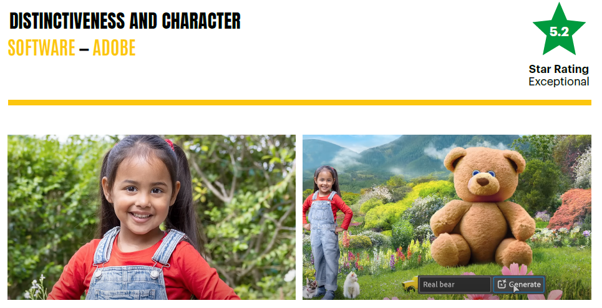
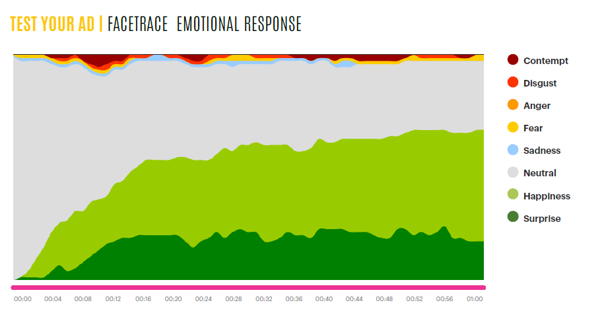
Adobe didn’t make generative AI interesting by explaining it. They made it human with their 2023 ad for Photoshop’s generative AI capabilities. That’s what great SaaS marketing does: – it shows impact, not infrastructure.
View the full Adobe ad report here.
Creative thinking isn’t a risk in B2B SaaS – playing it safe is
System1’s data is clear; making ads safer doesn’t reduce negative reaction – it just kills positive emotion and increases the cost of growth.
For B2B SaaS brands with:
- long sales cycles
- low purchase frequency
- crowded categories
Dull marketing and boring feature-led campaigns are the most expensive options available.
A practical check: how to make sure your B2B SaaS campaign isn’t dull
System1 and eatbigfish’s Anti Dull Dial is a useful gut‑check for any campaign. But B2B SaaS has its own traps – complexity, caution and consensus being the biggest. Below is a B2B SaaS‑specific way to apply the dial before your campaign goes live.
Not as theory. As a filter.
1. Are we meeting buyers where they actually care – not where we feel comfortable?
In SaaS, dullness often creeps in when campaigns:
- speak in internal language
- obsess over features
- or assume rationality is enough
A non‑dull SaaS campaign starts with buyer reality:
- What pressure are they under from their leadership team?
- Do they have a fear of making the wrong choice?
- Do they desire to look competent to their peers?
- Do they have a frustration with workarounds and inefficiency?
If your campaign doesn’t connect to a real emotional or professional tension buyers recognise, it will land as neutral – and be ineffective.
2. Are we judging interest by the buyer’s bar – or our own?
Internal teams are notoriously bad judges of what’s interesting. Our CEO Gary always tells the team that “We are not the customer!” and it’s a key principle to remember.
In SaaS especially, there’s a tendency to say what will matter to buyers based on what the team think is the best, most innovative feature. That’s how rational, heavily qualified, perfectly accurate – and utterly dull – campaigns get signed off.
The better question is; would anyone who doesn’t work here care about this?
If not, your campaign is optimised for approval, not effectiveness.
3. Are we being distinctive – or just a category participant?
Category sameness shows up visually long before it shows up in copy.
Ask honestly:
- Could this campaign belong to any SaaS company in our space?
- Would it still make sense with another logo on it?
- Are we borrowing category norms instead of expressing a point of view?
Distinctiveness isn’t decoration. It’s how buyers remember you when they’re not buying. If your campaign blends in, you’re paying category tax.
4. Are we using emotion, story or tension – or just information?
Information-heavy SaaS campaigns feel efficient. They aren’t. Emotion doesn’t mean humour or gimmicks. In B2B SaaS it often looks like:
- relief
- confidence
- momentum
- reassurance
- control
Storytelling helps because it organises information around meaning, instead of listing it. If your campaign has no narrative thread – no sense of change, challenge or resolution – it will struggle to hold attention, let alone memory.
5. Are we surprising buyers – even slightly?
Most B2B SaaS marketing reinforces what buyers already believe:
- “You need to move faster”
- “You need to reduce risk”
- “You need to automate X, Y & Z”
None of that is wrong. It’s just obvious. Non‑dull campaigns introduce a new angle:
- a reframed problem
- an unexpected truth and surprising hook
- or a challenge to how the category behaves
Surprise doesn’t have to be dramatic. It just has to interrupt autopilot. That’s what grabs attention.
One final test
Before launching a B2B SaaS campaign, ask one blunt question:
If this disappeared tomorrow, would anyone miss it – or even notice?
If the answer is ‘probably not’, it’s not a safe move – it’s a huge risk. Because it’s dull – and dull is expensive. You are about to throw marketing budget down the drain.
Dull B2B SaaS marketing isn’t the result of timid creativity – it’s the outcome of weak market orientation and generic positioning. When brands don’t understand the category they’re really competing in, and what their buyers truly care about, they default to sameness. And sameness produces neutrality, wasted spend and forgettable campaigns. The SaaS brands that win won’t be the ones that explain their product best, but the ones that position it clearly, campaign it consistently, and make buyers feel something long before they’re ready to buy.