Michael Curran
The Impact Of Marketing Automation Platforms For B2B Businesses
In the digitally fuelled marketplace of 2023, marketing automation has transcended from being a ‘nice-to-have’…

Let’s get real for a minute. Getting conversion-ready leads today through marketing efforts is tough.
The challenge of nurturing leads that are truly ready to convert into business opportunities is even tougher. Just when you think you’ve captured the ideal Marketing Qualified Lead (MQL), ready to be transitioned to the sales team, the ground shifts. These qualified leads often fail to meet the sales team’s criteria and are deemed ‘disqualified’, taking marketing teams back to square one. In fact, Gartner reveals that just 34% of MQLs successfully transition to sales-accepted leads (SALs), and from there, only about 47% make it to the sales-qualified lead (SQL) stage. The crux of the problem? A blurred understanding of the buyer’s true interests and intentions, and no visibility into the customer journey funnel.
This stark dilemma is where the true power of Marketing Technology (MarTech) comes in, offering deep insights into buyer behaviours and full customer journey mapping to improve sales pipeline predictability and fix the conversion problem. How exactly? Let’s explore.
MarTech, a blend of marketing and technology, represents the arsenal of tools and strategies that leverage digital solutions to drive marketing objectives. It is the convergence of marketing strategies and technological advancements aimed at enhancing marketing efficiency and effectiveness.
In the current environment, both marketing and sales teams face significant challenges. Sales teams deal with erratic pipelines, unreliable referrals, a shortage of inbound leads, mistimed outreach efforts, and lengthy sales cycles. At the same time, marketing teams encounter obstacles in understanding buyer behaviour, securing quality inbound leads, optimising campaigns efficiently, demonstrating ROI, managing manual reporting processes, and coping with disjointed tools that disrupt workflows and lead to data discrepancies.
This is where MarTech steps in. MarTech streamlines these processes, integrates various marketing functions, and aligns sales and marketing teams to execute strategies cohesively. It empowers both sales and marketing teams to become more agile in responding to opportunities promptly. After all, no one understands the significance of ‘striking while the iron is hot’ better than sales and marketing teams, and MarTech is the enabler that makes seizing these opportunities possible.
As experienced marketers, we are aware of the sophistication of today’s B2B buyers: savvy, discerning, and constantly evolving in their preferences.
The right MarTech tools help decode buyer behaviour, allowing for fine-tuning of campaigns for effective nurturing. They empower marketers with data, predictive analytics, and automation, facilitating the creation of personalised campaigns based on detailed customer journey insights, thereby eliminating guesswork in prospect nurturing.
In the B2B world, the speed of your response can be the deciding factor between seizing an opportunity or losing it. MarTech tools enable rapid adaptation to market shifts and informed decision-making. They ensure timely campaign launches and nurturing of leads, with technology integration facilitating agile and responsive marketing approaches.
MarTech transforms brand perception and positioning in the market. Sophisticated data analytics and insights aid in making informed decisions about your brand’s strategic position to justify marketing spend and ROI. MarTech also enhances sales predictability by analysing customer behaviour and market trends, leading to smarter sales strategies and improved conversion rates.
MarTech automation represents a significant shift in work dynamics. By automating routine tasks like lead qualification and email campaigns, it enables marketing teams to allocate more time to strategic thinking and creative endeavours. This not only maximises productivity but also fosters a culture of innovation. Teams can focus on developing deeper customer insights, crafting more compelling marketing narratives, and exploring new market opportunities. In essence, marketing automation with MarTech’s muscle enhances human capacity for smarter work, leading to more effective customer engagement and a noticeable boost in revenue growth.
An integrated MarTech stack is key to operational excellence, consolidating various marketing tools into a unified platform. This integration ensures seamless workflows and operational speed, with centralised data providing clear insights into marketing operations, leading to informed decisions and a unified marketing strategy.
Even when the economic sky looks a bit grey, businesses are pumping more money into B2B marketing, says LinkedIn’s latest report. Why? Because they have seen the light: MarTech can drive revenue. It is not wishful thinking; it is a cold, hard, data-backed strategy.
Over 50% of B2B marketing leaders emphasise the importance of mastering MarTech skills in the next two years, as per LinkedIn’s 2023 B2B Marketing benchmark report. This mastery is seen as crucial for modernising digital marketing approaches and achieving a better share of revenue.
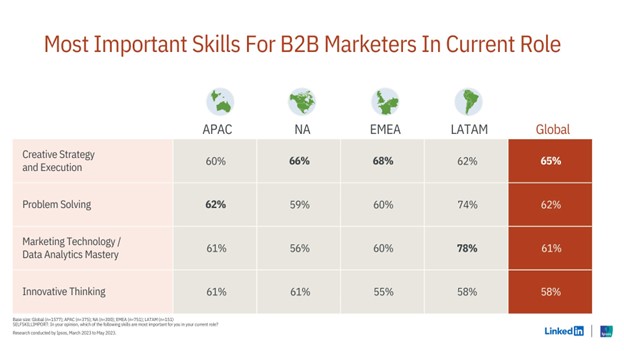
Here is something else that’s changing: the CMO’s role. Once the keepers of brand flame, they are now in the driver’s seat for revenue growth. LinkedIn’s 2023 B2B Marketing Report also reveals this shift, with about 50% of CMOs and CFOs acknowledging the CMO’s enhanced role in the C-suite and their direct impact on the bottom line. Now, they are not just brand stewards but key players in shaping company strategy and financial performance, leveraging MarTech to achieve these goals.
MarTech platforms harness AI to analyse lead data, providing a sophisticated and automated point-based scoring system for each prospect. This includes assessing online behaviours, past interactions and demographic information, enabling sales teams to concentrate on leads with the highest conversion potential. This strategic focus improves the efficiency and effectiveness of the sales process.
MarTech goes beyond traditional CRM by integrating customer data across various touchpoints, offering a 360-degree view of the customer journey. This integration ensures seamless communication and personalised customer experiences, enhancing customer loyalty and the potential for conversions.
MarTech’s integration with CRM systems results in a more streamlined marketing and sales process. By centralising customer information, it allows for efficient management of the customer journey funnel. This includes tracking leads from initial contact to conversion, ensuring no opportunity is missed and improving overall sales effectiveness.
MarTech’s ability to tailor marketing campaigns to specific audience segments is a game-changer. It enables the creation of highly relevant and engaging content, enhancing customer interaction, and increasing the likelihood of conversion. This targeted approach ensures that marketing efforts are not only more effective but also more cost-efficient.
The real-time reporting capabilities of MarTech platforms enable marketers to make swift adjustments to their strategies based on immediate performance metrics. This agility ensures that marketing campaigns are always optimised for maximum impact and ROI.
Why This Matters to You:
Implementing technology alone will not solve problems. True magic happens when MarTech aligns with your core business objectives. It is essential to integrate MarTech into your business strategy, ensuring that every tool, data point, and algorithm works in harmony with your goals. Addressing the challenges of personalisation vs. privacy and maximising your MarTech stack’s capacity are critical because underutilisation directly impacts business outcomes. In fact, when organisations use 50% or less of their martech stack, they are much more likely asked to cut their martech budget.
The cost of technology is not just financial; it is also the wasted time that can result from mismanagement. So, whether you are expanding market reach, enhancing customer experience or streamlining operational efficiency, MarTech should seamlessly integrate into these objectives, serving as the cornerstone of your strategies.
The human element in MarTech is pivotal. As we prepare for the future, viewing MarTech as a vital supporter of team dynamics, particularly between sales and marketing, is crucial. MarTech can be a catalyst for breaking down silos between departments, but culture change can still be a challenge. Encouraging a culture of collaboration—and using MarTech as a bridge—is key. It effectively makes teams more adaptable and responsive while ensuring that MarTech is leveraged as a strategic asset. Given the increasing role of IT in MarTech management, fostering strong IT-marketing partnerships or onboarding specialist marketing agencies can enhance this collaboration, making teams ready for tomorrow’s challenges.
MarTech is the backbone of effective B2B GTM strategies today. It revolutionises how we anticipate sales and pinpoint valuable leads, steering away from old-school methods to a more data-centric approach that aligns with current market complexities.
With over 11,000 MarTech tools available today and more on the way (courtesy of the AI surge), choosing the right one is critical. It’s not about having technology for the sake of it; it’s about selecting tools that genuinely address your marketing challenges and mesh with your strategic objectives.
And, from my years of experience, I can confidently assert that having the best technology in the world is not enough; it must be implemented effectively, and your team must use it efficiently for it to be truly valuable.
So, ask yourself: Are you making the right moves with MarTech? Is your current MarTech stack helping you resolve your marketing dilemmas and preparing you for what’s next? Choosing the right MarTech stack is the first action you need to take to unlock a multitude of benefits for your business growth.